Paper Presented at WI 2023 in Paderborn, Germany
Our research group presented a paper at the 18th International Conference on Wirtschaftsinformatik (WI 2023) in Paderborn, Germany. The research-in-progress paper proposes a hybrid chatbot architecture that combines traditional chatbot techniques with the capabilities of large language models.
WI - Internationale Tagung Wirtschaftsinformatik
The Internationale Tagung Wirtschaftsinformatik is the premier academic conference for Information Systems research in the German-speaking community. It brings together researchers, practitioners and early-career scholars to present and discuss current research. The 18th edition took place in Paderborn, Germany, from September 18 to 21, 2023, under the theme "Digital Responsibility: Social, Ethical, Ecological Implications of Information Systems."
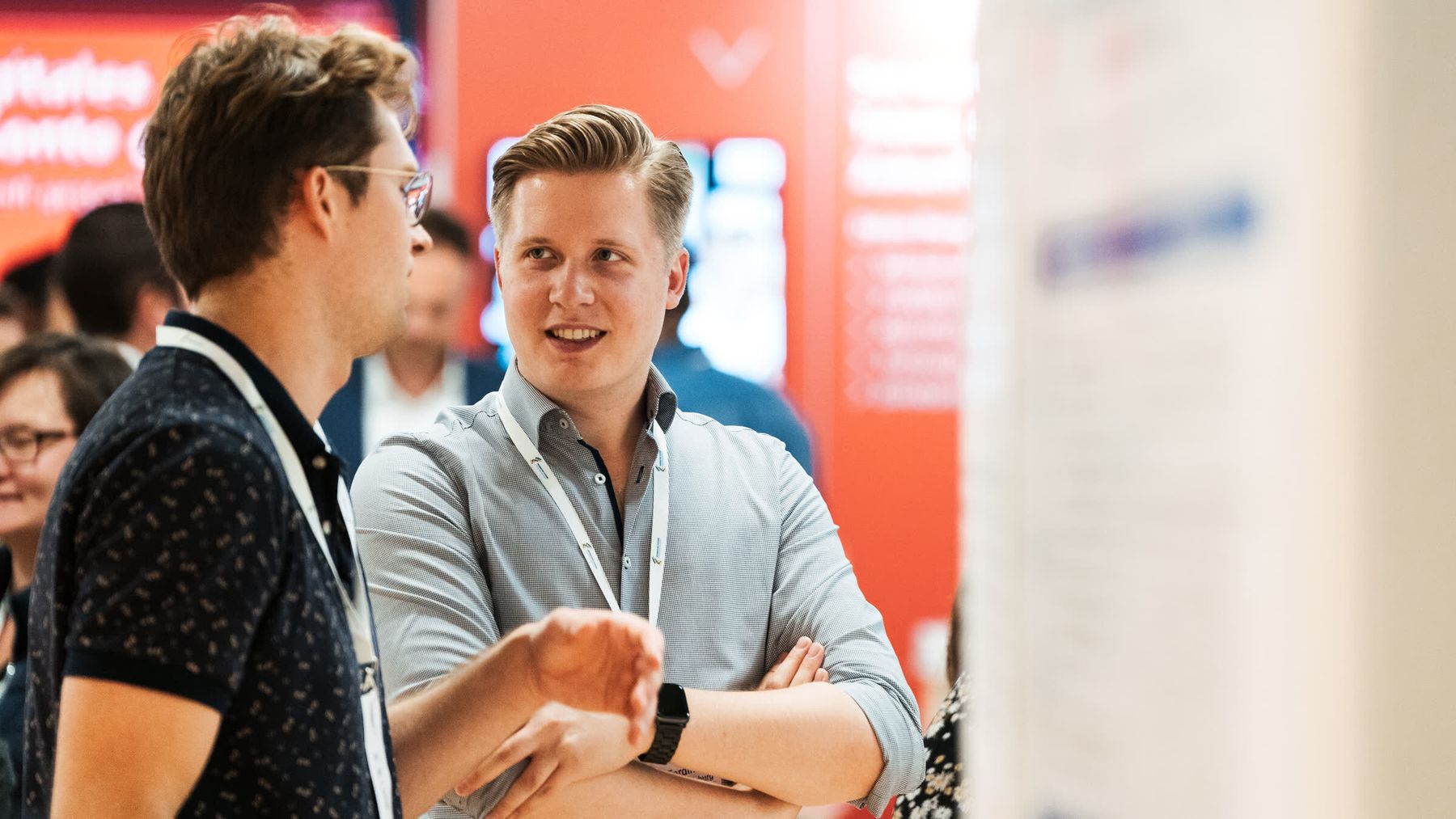
A Short Paper Presented in the Poster Session
As a short paper, the contribution was presented during the conference's poster session rather than in a separate paper presentation. This format enabled direct and detailed conversations with participants about the proposed architecture, the complementary capabilities of traditional chatbots and large language models, and the practical challenges of integrating both approaches in organization-specific settings.
For our research, the paper represents a starting point for developing and evaluating hybrid chatbot architectures. The discussions and feedback received during the poster session helped sharpen the research direction and opened the door to further investigation. Future work can build on this conceptual foundation by implementing the architecture, examining how its agents interact and evaluating how users perceive the resulting chatbot capabilities.
Paper Abstract
Towards Hybrid Architectures: Integrating Large Language Models in Informative Chatbots
Authors: Arnold F. Arz von Straussenburg & Anna Wolters
Informative chatbots embedded in an organization-specific context can provide users with a reliable, interactive and engaging source of information. Traditional chatbot techniques, however, have limitations in processing and understanding user input and in generating human-like responses. Large language models show promising results in these areas but can struggle to provide accurate and up-to-date facts from domain-specific knowledge bases.
The paper argues that the strengths and weaknesses of traditional chatbot techniques and large language models are complementary. It therefore proposes a hybrid chatbot architecture that uses inter-agent communication to combine both approaches, compensate for their respective disadvantages and enhance the chatbot's capabilities from the user's perspective. This architecture provides the basis for subsequent development and evaluation through Design Science Research.
Funding and Acknowledgements
This research was funded by the Federal Ministry of Education and Research (BMBF), Germany, under research grant 16DHBKI039 as part of the IH-evrsKI project.
We thank the WI 2023 organizers, the local hosts at Paderborn University and everyone who engaged with our poster. Their questions and feedback provided valuable impulses for the next stages of this research.